Speech Therapy
Support for communication, language, articulation, and social communication growth. Our speech-language pathologists help children find their voice and connect with the people around them.
About this service
Communication is how children share who they are with the world. We help them find their voice — whether that means spoken words, gestures, AAC, or simply new ways to connect with the people they love.
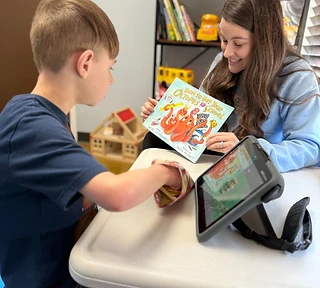
Our speech therapists serve children across a wide range of needs, specializing in receptive and expressive language disorders, childhood apraxia of speech, and persistent sound disorders. Therapy is individualized, play-based, and paired with family coaching that carries progress well beyond the therapy room.
Every child deserves a voice — and the tools to use it.
What we help with
What to expect
- Comprehensive communication assessment across speech, language, and social communication
- Individualized, play-based therapy targeting each child's specific goals
- Family coaching to support and reinforce progress at home
Areas we specialize in
Receptive & Expressive Language Disorders
An expressive language disorder means a child struggles to get their meaning or messages across to others. A receptive language disorder means they struggle to understand and process messages they receive. Our therapists address both.
Autism Spectrum Disorder
Some children with ASD may not communicate using speech or language and would benefit from speech therapy — including augmentative and alternative communication strategies.
Childhood Apraxia of Speech
A speech disorder in which a child's brain has difficulty coordinating the complex oral movements needed to create sounds into syllables, syllables into words, and words into phrases. Therapy is individualized to each child's specific motor speech needs.
Persistent Sound Disorders
Speech sounds that don't improve after months or years of traditional therapy. There are different types of therapy that can help — and every program is tailored to the individual's specific speech sound or articulation disorder.